


A high-quality steel raised floor panel is more than just a simple construction element—it’s a precision-engineered product designed to deliver exceptional load-bearing capacity, durability, and aesthetic appeal. In this post, we’ll explain the complete production process, highlight the key quality control measures, and share why every detail matters when choosing a steel raised floor system.
Structure of a Steel False Floor
A complete steel false floor panel is constructed by welding an upper steel plate and a bottom steel plate together to form a sealed steel shell. This shell is then filled with the cement. For enhanced aesthetics, an additional decorative surface—such as HPL, PVC, rubber, or ceramic tiles—can be laminated on top, making it ideal for environments like data centers, sever room and commercial spaces.

Production Process of Steel Raised Floor Panels
1. Raw Material Procurement
- Premium Steel Supply: All steel plates are sourced from reputable state-owned enterprises in China, like Bao Steel, Tangshan JianLong Steel, ensuring consistent quality and precise thickness. Every steel coil comes with an inspection certificate, which is critical for meeting high industry standards and fulfilling large or specialized projects.

2. Flattening of Steel Coils
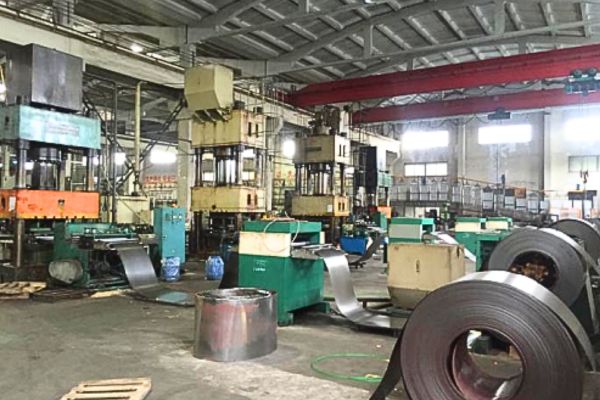
- Uncoiling and leveling of steel coil: Both the top and bottom steel plates are produced by flattening steel coils into standard dimensions (600×600 mm or 610×610 mm). For bottom plates, specialized equipment stretches the material to form a multiple cup-shaped steel shell. Two types of machinery are employed—one for thick steel plates and another that directly produces a stretched shell, offering enhanced efficiency for panels in the 800lbs–1250lbs range.
3. Welding
- Expert Welding Process:Once both the upper steel plate and the lower steel plate are ready, the welding process can be carried out. Welding is a task that severely tests the experience of workers. If the current is too low, false welding points will be formed, which means that the upper and lower steel plates are not firmly welded. If the current is too high, although the welding will be firm, there will be obvious protruding welding points on the upper surface of the floor, affecting its appearance. At the same time, welding slag will also appear in the spherical cups of the lower steel plate. If not dealt with, when the floor is taken to the construction site, workers may get their hands pierced by the welding slag during handling.Other factories often tend to overlook this step and directly move on to the next production process. However, for the access floors of the Himor brand, we also set up an important welding point firmness test at this step. The quality inspector will place the welded floor on the equipment, then pry open one corner and let the machine tear the upper and lower steel plates. If each welding point can be torn open, it indicates that the firmness of the welding passes the test.
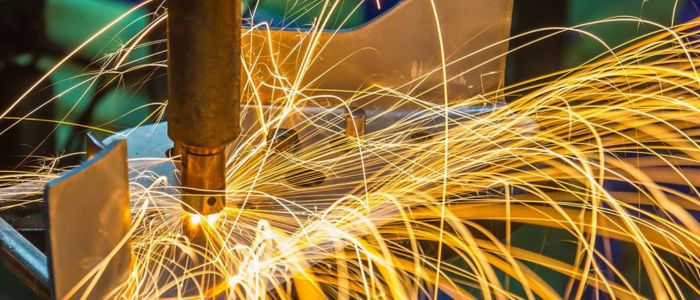
- Below is automatic welding machines for raised access flooring:
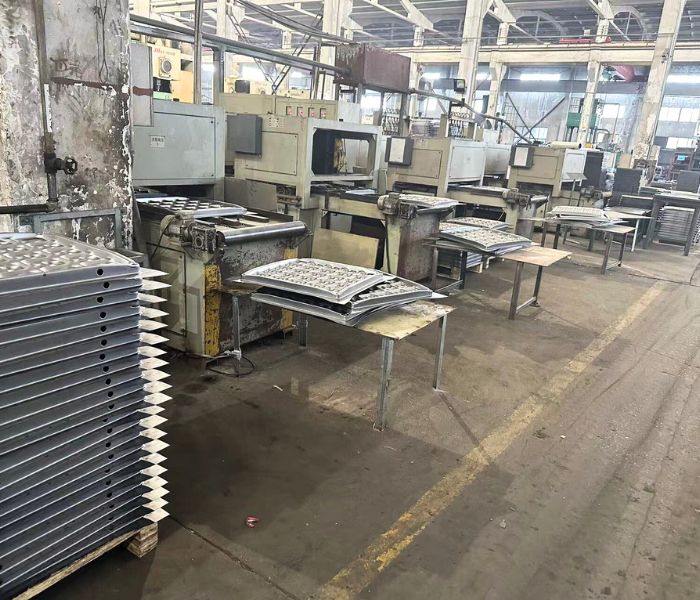
Below is good welding points of steel access floor:

4. Flattening & Edge Trimming
- Maintaining Dimensional Accuracy: After high-temperature welding, the steel shell is prone to deformation. A stamping machine is used to simultaneously flatten the steel panels and trim excess material, ensuring precise dimensions. Quality inspectors then verify the flatness and the length of all four edges.
- Below picture is doing the flatness checking for the steel shells after trimming

5. Edge Grinding & Deburring
- Refined Finishing: To ensure safety and a refined appearance, the rough, burry edges of the panel are manually ground down by skilled workers. This attention to detail not only enhances aesthetics but also prevents potential injuries during installation.

6. Phosphating & Powder Coating
- Enhanced Durability and Appearance: Before powder coating, each steel shell undergoes phosphating to remove oils and impurities. The panel is then powder coated with customizable colors—commonly light gray, dark gray, or green—offering superior corrosion resistance and a sleek finish.

7. Cement Grouting Process
- Optimized Load-Bearing Capacity:
- Advanced Cement Mix: Instead of using 100% pure cement, a carefully proportioned mix with water and a foaming agent is used. The foaming agent creates microbubbles in the cement, enhancing the load-bearing capacity of the panel.
- Quality Cement: For high-spec applications, 425 cement (known for its high purity and reduced noise) is available, while standard installations typically use 325 cement. All cement is sourced from state-owned enterprises, complete with quality certificates.
- Eco-Friendly Water Recycling: In response to environmental policies, the production line now incorporates a state-of-the-art wastewater treatment system. This system recycles and purifies water, ensuring that only high-quality water is used in the mix.
8. Curing
- Ensuring Full Strength: After grouting, panels are allowed to cure for 24 hours on a dedicated conveyor line. Storing the panels vertically during curing prevents voids between the steel plate and the cement, which is crucial for maintaining the panel’s high load-bearing performance.

9. Surface Lamination (Optional)
- Anti-static raised floor or conductive raised floor:
- If you want to save the second decoration, you could choose to laminate a decorative tile on the top of bare floor. Normal tiles include HPL and PVC. Both of these veneers have anti-static functions and are suitable for rooms such as data centers, computer room, IT room, serve room where equipment is placed on the access floor. Of course, the decorative tiles can also be ceramic, linoleum, rubber, etc. This step only requires spraying glue on the upper surface of the bare false floor, put tiles on the floor top, and then rolling it to enhance the adhesion.
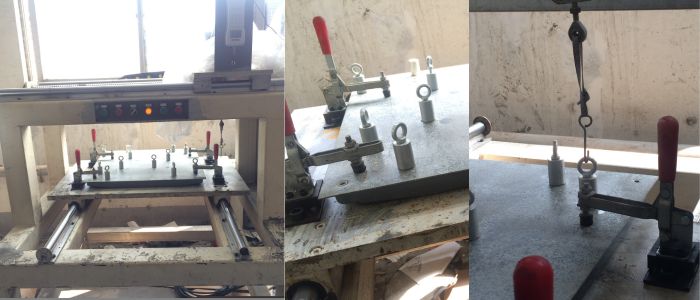
- For this step, we also set up a test device specifically to test the adhesion strength of the laminating so that the test can be digitized, as shown in the following picture.
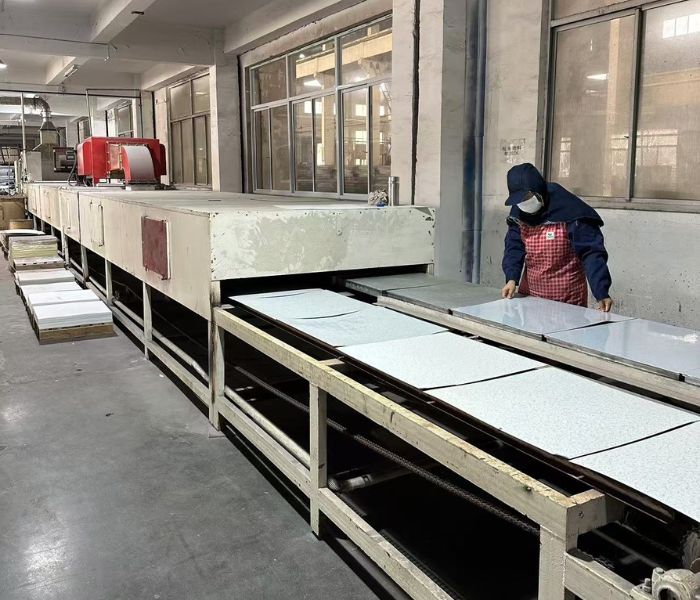
- Below test equipment is about Adhesion fastness test:
Quality Control & Inspection
Each steel raised floor panel is subjected to rigorous quality checks, ensuring every detail meets strict standards:
-
Flatness:
- Four Edges Flatness: ≤ 0.5 mm
- Two Diagonals Flatness: ≤ 0.7 mm
- Weld-to-Weld Flatness: ≤ 0.13 mm
-
Twisting:
- Maximum Twist: ≤ 0.5 mm
- This ensures that no twisting occurs during welding and cement grouting, which is vital for an even installation.
-
Dimensional Accuracy:
- Edge & Diagonal Measurements: The differences in diagonal measurements are controlled within ±0.3 mm. This precision is crucial for maintaining the correct installation gap, typically between 0.3–0.5 mm.
-
Corner Lock Hole Alignment:
- The distance from the corner lock hole to the edge is meticulously controlled to ensure proper alignment with support brackets during installation.
-
Corner Height & Drop-Off:
- Deviation Control: Both the corner height and drop-off are maintained within a 0.2 mm tolerance. This guarantees that no noticeable height differences occur during installation, ensuring a uniform and stable floor.


Conclusion
While the structure of a steel elevated floor may appear straightforward, producing a high-quality product demands meticulous attention to every detail. From sourcing premium materials and executing precision manufacturing processes to implementing stringent quality inspections, each step is essential in delivering a steel raised floor system with superior load-bearing capacity, durability, and visual appeal.
Choosing a trusted brand like Himor means investing in a floor panel that meets the highest standards, ensuring reliability and performance for modern architectural and industrial applications.