


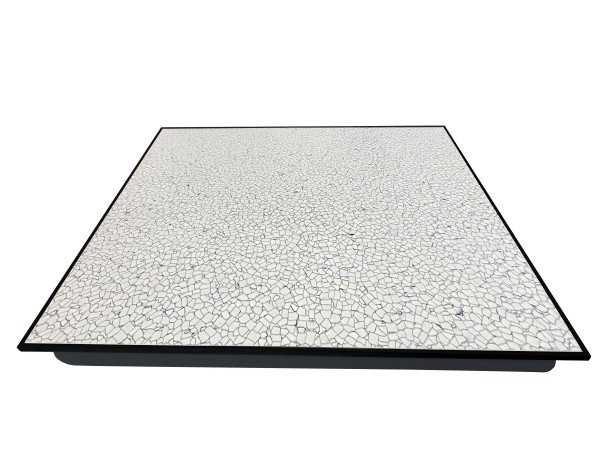

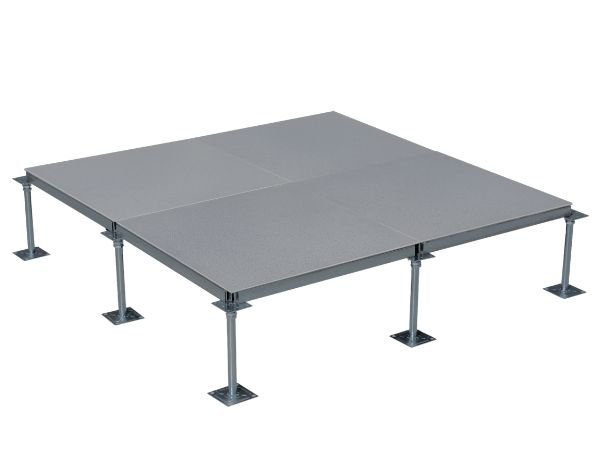

Steel Raised Access Floor Panel with PVC Finish | Durable and Anti-Static
Panel Available Size:600*600*35mm , 610*610*35mm
PVC Available thickness: 2.0mm-Antistatic, 3.0mm-Antistatic,
2.0mm Conductive, 3.0mm Conductive
Performance:
- Decorative combination with steel flooring, strong load performance
- Waterproof and moisture-proof
- Fire retardant and flame retardant
- Concentric transparent, scratch resistant and wear-resistant
- Avoiding secondary decoration, saving time and economic
- Sound insulation and muting
* The 600×600×35 mm standard steel raised floor panels with PVC finish are ideal for computer rooms and server rooms.
Introduction
Raised vinyl flooring: We laminate conductive or static dissipative PVC on the top of a bare steel cement floor. Anti-static PVC, which consumes static electricity, safeguards sensitive devices and critical applications by dissipating static charges. Consequently, it is predominantly used in public places like hospitals, industrial cleanrooms, and electrical laboratories. The PVC is directly laminated to the floor to avoid thermal expansion and contraction.
Technical Data
Utilizing the load capabilities of steel plates, we offer the following grades for PVC raised floors:
| FS800 with stringer |
FS1000 with stringer |
FS1250 with stringer |
FS1500 with stringer |
FS2000 Heavy Grade with stringer |
FS2500 Heavy Grade with stringer |
FS3000 Heavy Grade with stringer |
|
| Concentrate Load | ≥3560 | ≥4450 | ≥5562 | ≥6675 | ≥8900 | ≥11125 | ≥13350 |
| Ultimate Load | 1350kN | 1830kN | 2000kN | 2500kN | 3050kN | 4000kN | 4280kN |
| Impact Load | 0.45kN | 0.55kN | 0.65kN | 0.75kN | 0.85kN | 1.0kN | 1.0kN |
| 10 Passes Rolling Load | 2.7kN | 3.6kN | 4.4kN | 5.6kN | 6.7kN | 8.9kN | 12kN |
| 10,000 Passes Rolling Load | 1.8kN | 2.7kN | 3.6kN | 4.4kN | 5.6kN | 8.9kN | 10.6kN |
Learn More About PVC Raised Floor
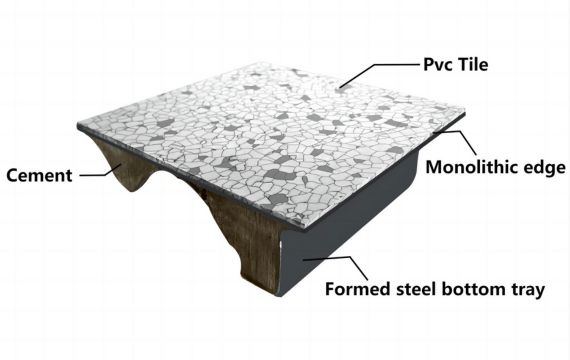
Top view of the steel raised floor with PVC
Choose one of your favorite PVC color and then laminate to the required grade of bare floor.
Bottom view of the floor
The bottom structure is same like a steel bare floor, except for without four corner lock holes.

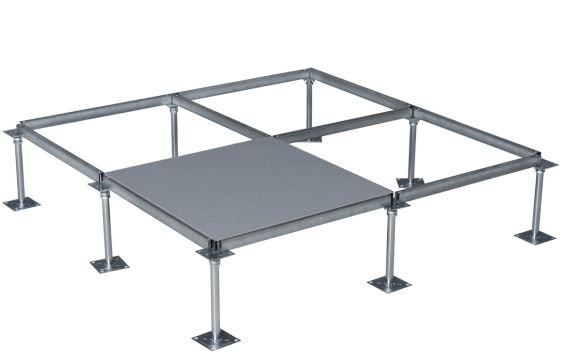
Installation structure of PVC raised floor
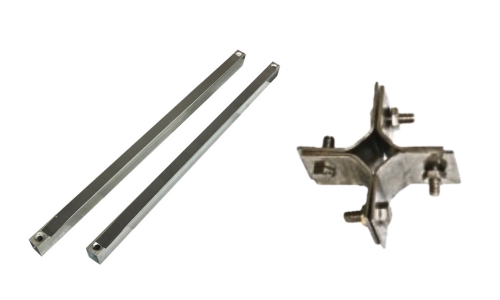
PVC installation system will use stringers, pedestals and screws.
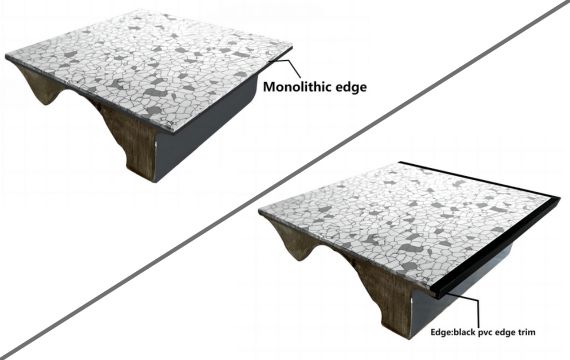
PVC raised floor edge design
There are total two edge designs for the vinyl raised floor, PVC edge or monolithic edge.
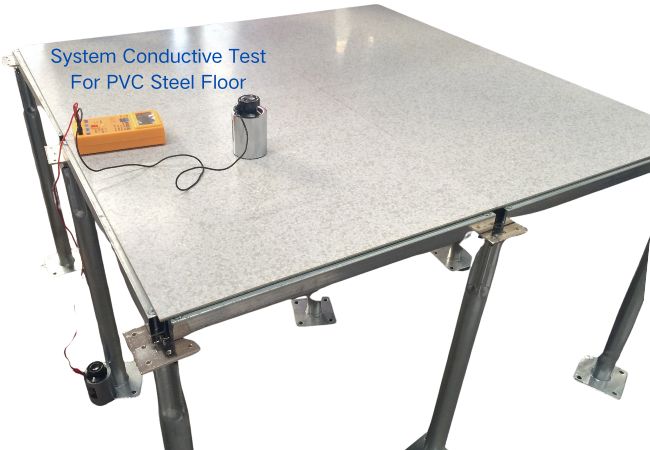
Conductive test for raised access flooring system
It is doing the system conductivity test. The flooring surface is finished with PVC, and the test is designed to measure the conductive performance of the system to ensure compliance with industry standards.
With permanent anti-static properties, these PVC-finished floor panels are perfect for cleanroom flooring and anti-static environments.
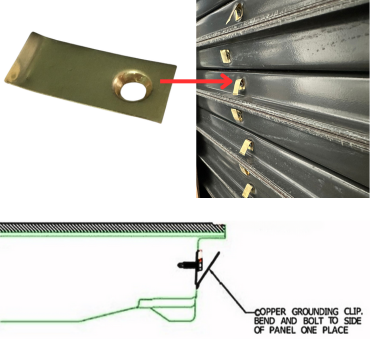
Copper clips function for the anti-static raised floor
Rapid Electrostatic Dissipation: Quickly channels static charges to the ground, keeping the floor surface free of static ions. This prevents interference and damage to electronic equipment, such as data loss and malfunctions in server rooms.
Equilibrium Potential: Ensures the entire anti-static flooring system remains at a uniform potential, preventing electrostatic discharge (ESD) between areas. This protects equipment and personnel, especially in sensitive electronics manufacturing environments.
PVC Tile Colour Catalogue
PVC Tiles Detail Page
Our PVC quality is very stable, almost have not received any complaints. We have many colors, and the following are the most popular types. If you want to customize the color, you can also consult us directly.
According to electrostatic requirements, we can provide two different types of PVC Tile:
Static Dissipative: 106- 1010Ω, Conductive:104- 106Ω
Available Thickness for PVC tile: 2.0mm,3.0mm

These raised access floor panels are ideal for data centers, server rooms, cleanrooms, and other IT infrastructure environments requiring dust-proof and anti-static properties.


Related Products (7)


Test Name: SURFACE-TO-GROUND ELECTRICAL RESISTANCE
PANEL TYPE: Steel Raised Floor with HPL/PVC finish
UNDERSTRUCTURE TYPE: Bolted Stringer
TEST METHODS: NFPA 99 and ASTM F150
The panel surface-to-understructure resistance was measured at 500 volts and at 100 volts using a [ PC27-7H ] insulation tester with one test lead attached to a 2.27 kg electrode with a [ 63.5 ]mm diameter placed on the surface of the panel and with the second lead attached to the understructure. The tester had a nominal open circuit voltage of 500 volts DC. Readings were taken at five locations on the panel (center of panel and center of each panel quadrant) and averaged.