



Steel Raised Floor With Rubber Finish
Panel Available Size:600*600*35mm
Rubber Available Thickness: 3.0mm, 4.0mm
Performance:
- 1. Strong wear resistance through specialized treatments.
- 2. High hardness can effectively minimize wear and extend the product’s lifespan.
- 3. Rubber tile is made from natural or synthetic rubber, and is non-toxic, harmless, and environmentally friendly.
- 4. Rubber exhibits robust corrosion resistance, resisting erosion from chemicals like acids and alkalis.
- 5. Rubber boasts excellent insulation properties, effectively impeding the flow of current and heat.
- 6. Rubber maintains stable performance even at high temperatures, resisting softening and deformation.
Introduction
We laminate a rubber tile directly on the top of a steel bare floor. Rubber, a material known for its elasticity, can achieve superior wear resistance with special treatment. Our rubber tile, is recognized for its environmental friendliness, wear resistance, and slip resistance. It has seen a growing application in architecture and interior decoration in recent years.
Technical Data
Utilizing the load capabilities of steel plates, we offer the following grades for steel raised floors:
| FS800 with stringer |
FS1000 with stringer |
FS1250 with stringer |
FS1500 with stringer |
FS2000 Heavy Grade with stringer |
FS2500 Heavy Grade with stringer |
FS3000 Heavy Grade with stringer |
|
| Concentrate Load | ≥3560 | ≥4450 | ≥5562 | ≥6675 | ≥8900 | ≥11125 | ≥13350 |
| Ultimate Load | 1350kN | 1830kN | 2000kN | 2500kN | 3050kN | 4000kN | 4280kN |
| Impact Load | 0.45kN | 0.55kN | 0.65kN | 0.75kN | 0.85kN | 1.0kN | 1.0kN |
| 10 Passes Rolling Load | 2.7kN | 3.6kN | 4.4kN | 5.6kN | 6.7kN | 8.9kN | 12kN |
| 10,000 Passes Rolling Load | 1.8kN | 2.7kN | 3.6kN | 4.4kN | 5.6kN | 8.9kN | 10.6kN |
Learn More About the Rubber Raised Floor

Top view of the steel raised floor with rubber finish
We will laminate a 3.0mm rubber tile on the top of the steel bare floor.
Bottom view of the floor
The bottom structure is same like a steel bare floor, except for without four corner lock holes.


Edge design for the rubber steel raised floor
Installation system of rubber steel raised floor
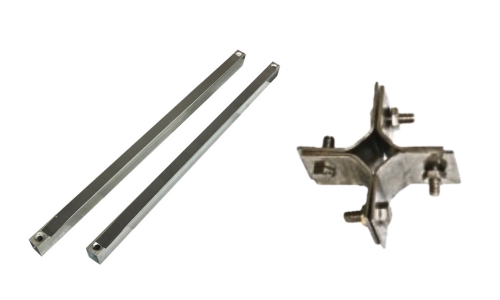
Installation workers use 4pcs 60cm steel stringers and 4 steel pedestals to build a square frame and fix it with screws, then put one piece of 600*600mm rubber floor into the frame.

Available Rubber Tile Colour
- Available thickness: 3.0mm, 4.0mm


Applicable Area for Steel Raised Floor With Rubber Finish


Related Products (7)


In public areas, the first thing to consider is the wear resistance. As we all know, the raw material of car tires is rubber, so choosing rubber as a flooring material can maximize its advantages. Moreover, the chemical properties of rubber are very stable and not easily corrupted, so it is also very suitable for use in biological laboratories.
PVC is very innovative and can be designed with a variety of decorative patterns.
Rubber has a limited number of patterns, but it is very wear-resistant and has a long service life.
Rubber flooring is more expensive because it requires a more complex manufacturing process. But it is more durable and can be used for a longer time.